Shooting Film in a World That Wants Everything Now
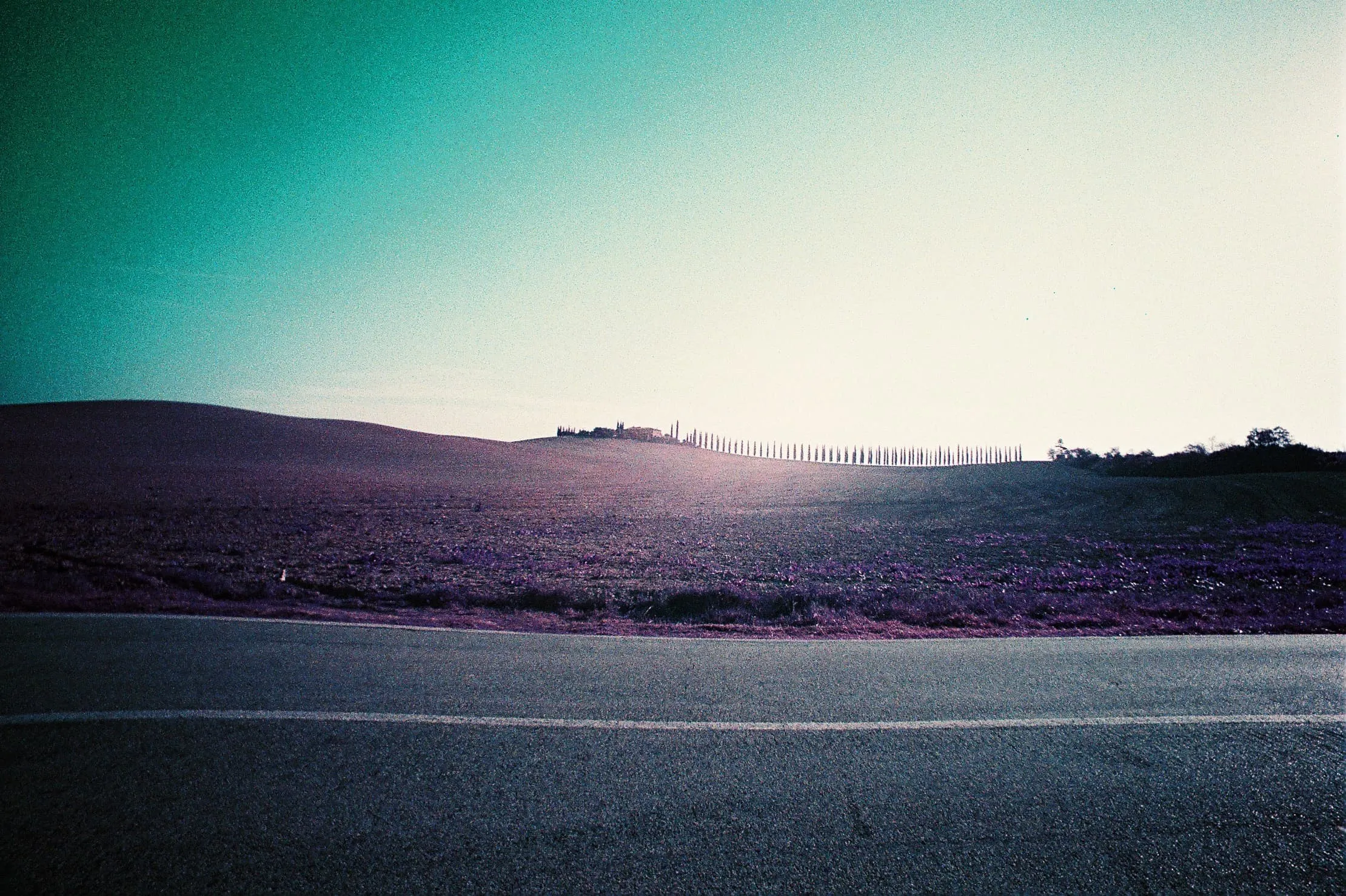
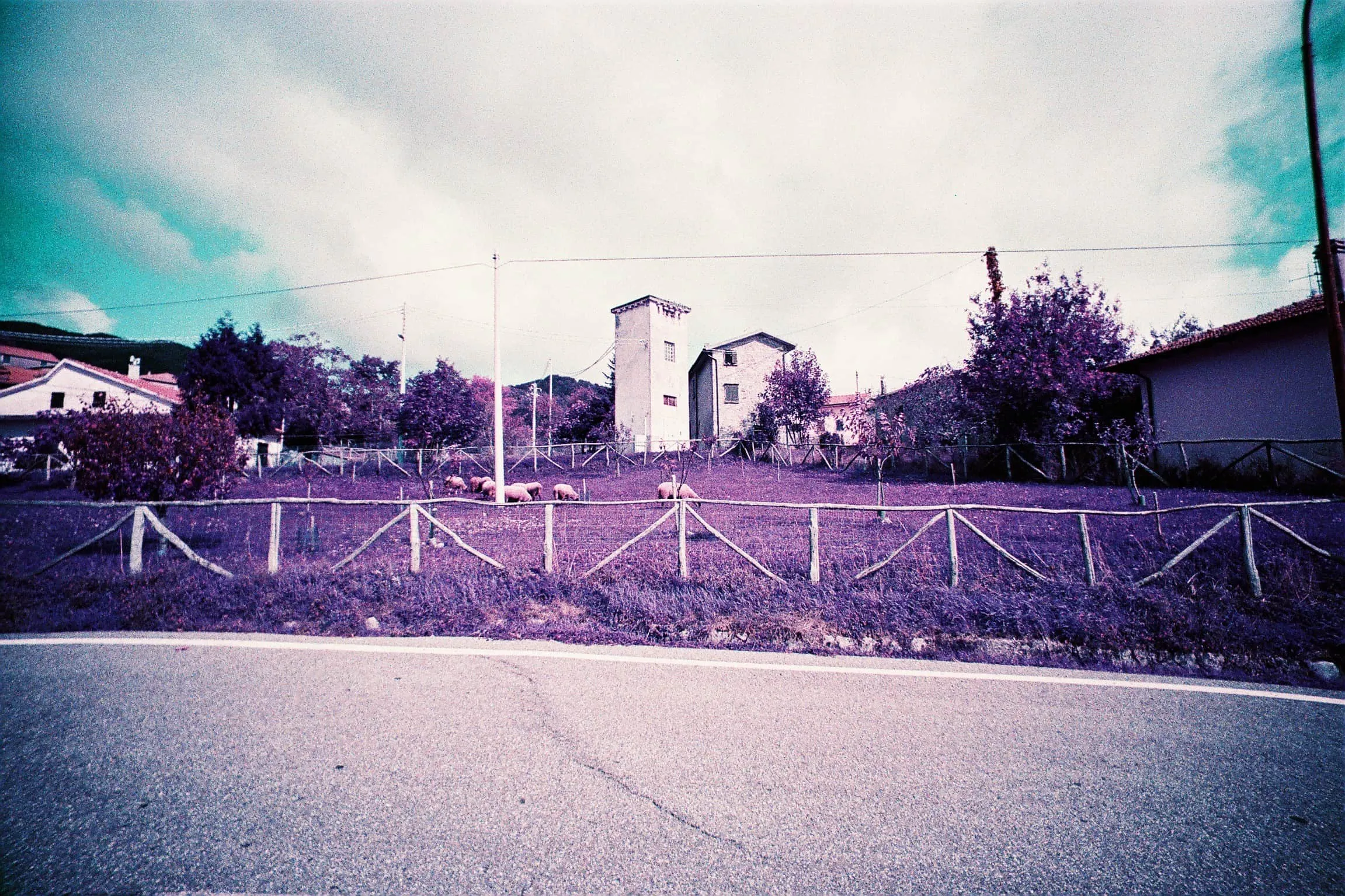
Via Francigena, Tuscany, 2019. Lomo LC-Wide, Lomo Purple.
Somewhere in Tuscany in 2019, while cycling the Via Francigena from Parma towards Vatican City, I slowed down on the side of the road and took one quick photograph.
It was not a dramatic stop. I did not set up the shot or think much about composition. I saw the hill, took out my Lomo LC-Wide, pressed the shutter, and kept riding. By that point in the journey, the days had settled into a routine: ride, stop, stamp the pilgrim credential, drink water, take a photograph, move on.
I had loaded Lomo Purple film for the trip, so the photographs returned with colours I could not have predicted. Tuscany looked shifted, almost dreamlike. Some photos were strange, some were too dark, some were probably only meaningful to me. I did not think much about that road photo until the scans came back, but it seemed to hold the trip in its simplest form: road, light, distance, and movement.
It was my first bikepacking trip, so everything still felt new: judging how far I could ride in a day, learning when to stop, feeling the weight of the bike, moving from one village to the next without fully knowing what the next stretch would be like. Looking at that photograph now, I remember not just the place, but the feeling of being new to that kind of journey.
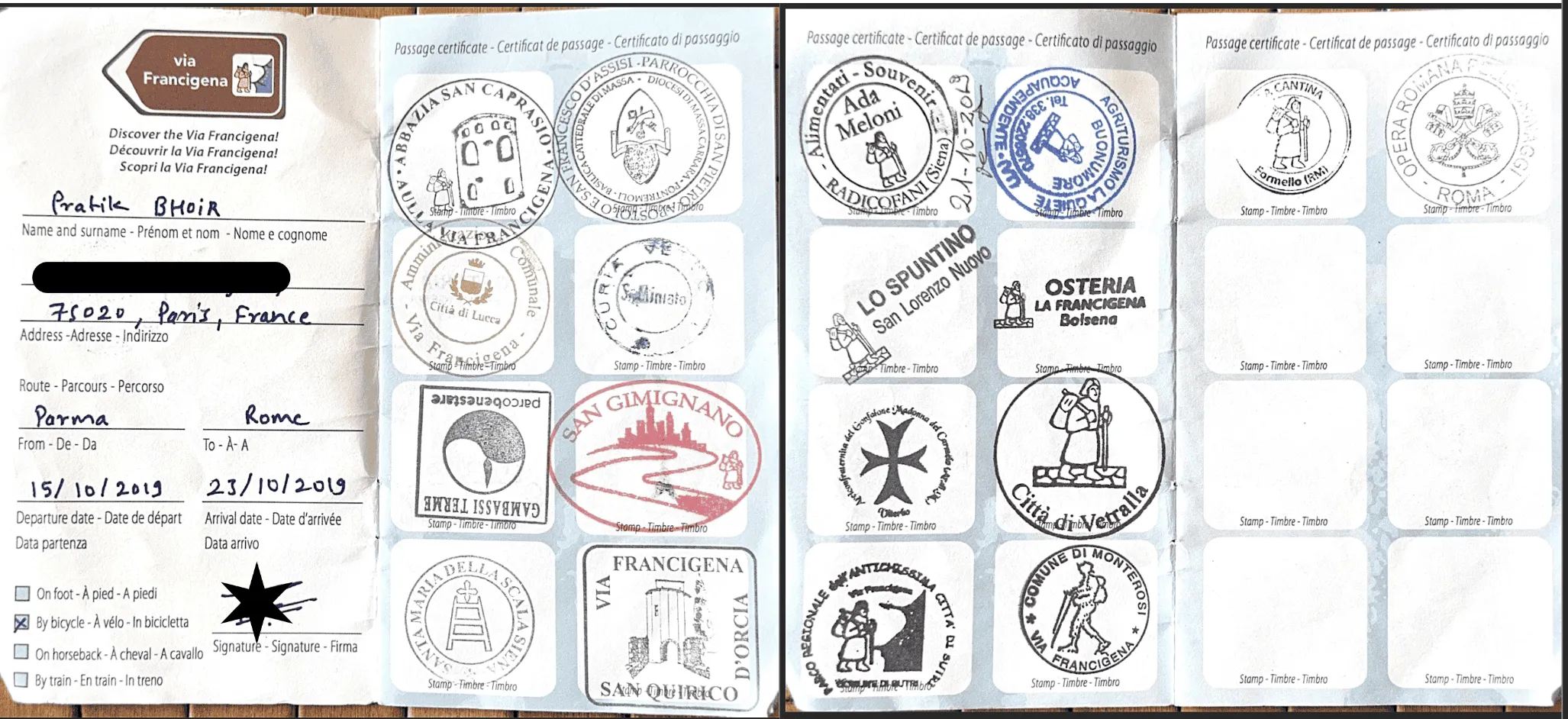
Pilgrim stamps collected between Parma and Rome.
The stamps mattered more than I expected. At first, they were just part of the process. I needed them as proof that I had followed the route, and later they helped me receive the pilgrim certificate in Vatican City. But after a few days, the credential became more than paperwork. The different inks, names, dates, and imperfect impressions gave the journey a physical shape.
A GPS track could show the route, but the stamps felt different. They were handled and collected, one by one. Each one marked a small pause along the way.
Film began to feel connected to that. Each photograph was another small mark from the road, but one I could not check or judge yet. No immediate confirmation, no perfect version chosen from twenty attempts. Just images collected along the way, waiting to mean something later.
By the time I reached Vatican City, the journey had become more than a line on a map. It was paper, ink, film, dust, tired legs, and a handful of photographs that did not show everything, but somehow remembered enough.
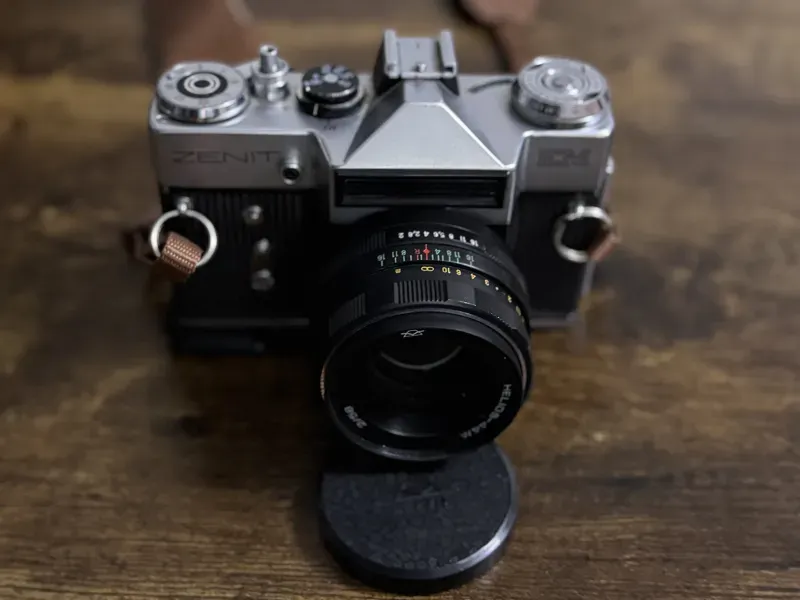
My Zenit EM was the camera that started the question.
I did not come to film photography with a philosophy. I was not trying to rebel against Instagram or make a statement about slow living. I was just curious. Before digital cameras became the default, how did people actually take photographs? What did it feel like to make an image without seeing it immediately?
Sometime around 2014, I bought a Zenit EM. It was a fully mechanical Soviet camera: heavy, stubborn, and simple in a way I liked. No software updates. No menu system. Just metal, glass, film, and whatever I could figure out with my hands.
I loaded a roll, shot it, had it developed, and learned quickly that film was not just about the final image. It was also about everything that happened before the image existed: choosing the settings, focusing by hand, winding the film, hearing the shutter, and accepting the small uncertainty that came with pressing the button.
That Zenit is still sitting on my shelf. It still works.
I do not remember the exact first roll that made me love film. Memory is not that organised. But I remember coming back from Djerba, Tunisia, with a roll that surprised me. More photographs worked than I expected, and for the first time film felt less like an experiment and more like something I wanted to keep doing.
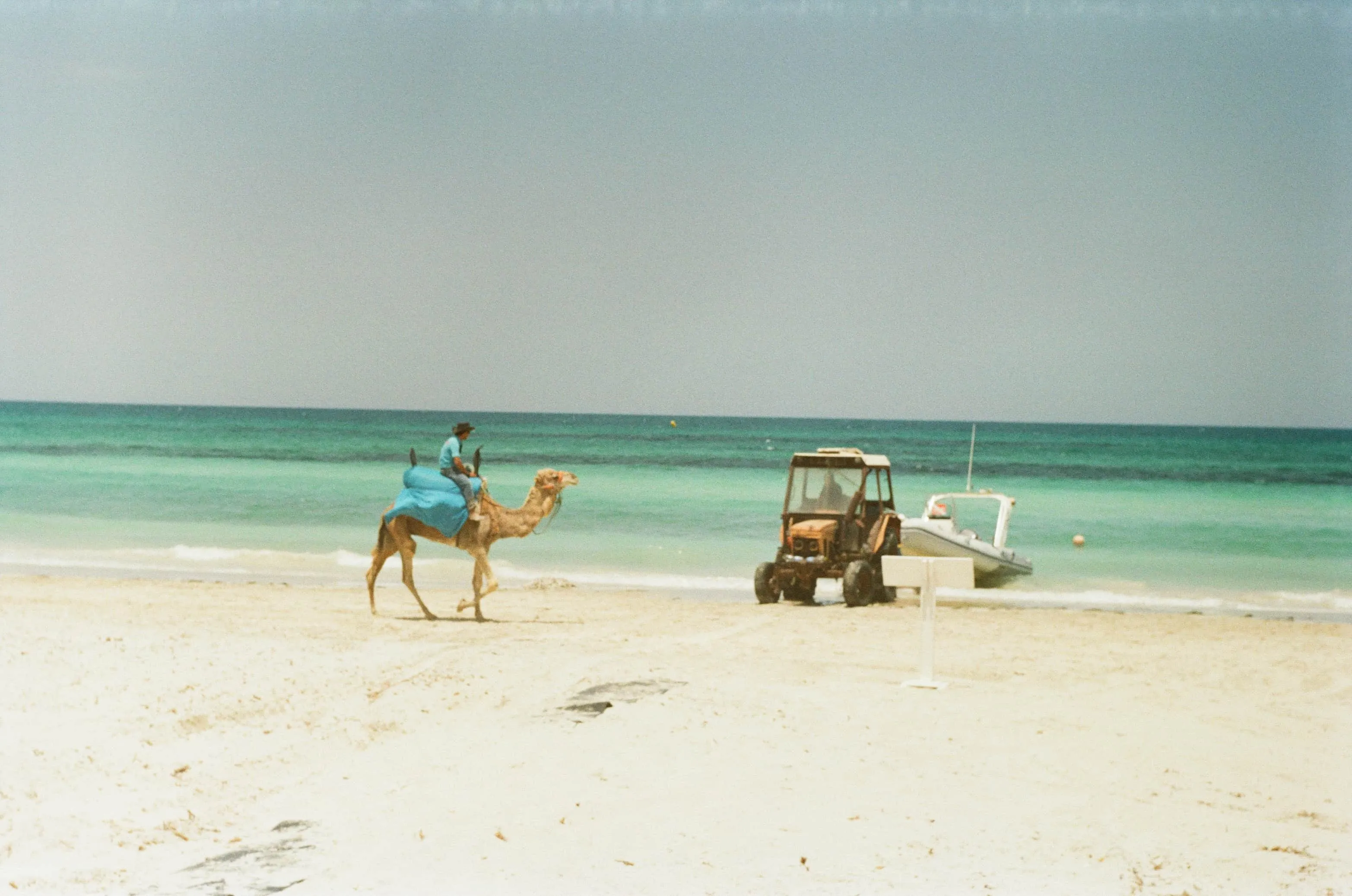
Djerba, Tunisia. One of the rolls that made me trust film.
One of those photographs was of a camel on a beach: pale sand, bright water, a tractor near the shore. Nothing dramatic, really, but I kept returning to it.
Maybe it was the softness, the colour shift, the grain, or the slight loss of control. Maybe it was simply a question of taste. The imperfections did not feel separate from the photograph. They were part of its character.
That roll changed something for me. Film stopped feeling like a curiosity and started feeling like a way of making photographs I wanted to spend time with.
I spend my days as a sysadmin, and much of that work is built around feedback: logs, alerts, dashboards, graphs, monitoring systems. A good system tells you quickly when something is wrong. If a service slows down, you see it. If something breaks, you know. The distance between an event and the knowledge of that event is something we try to make as short as possible.
Film gives me the opposite experience. You press the shutter, and there is no immediate answer. No preview, no histogram, no delete button, no quick correction. The image exists somewhere inside the camera, on a strip of light-sensitive plastic, but it is unavailable to you. You made a decision, and now you have to wait.
With digital photography, I often do what most people do. I take the photo, check it, judge it, take another one, adjust, check again. Sometimes I take ten or twenty versions of the same moment, not because the moment has changed, but because the screen gives me permission to doubt the first one.
Film interrupts that habit. A roll has limits: thirty-six frames, sometimes fewer. Each frame costs something - the film, the development, the scan, the time. That cost changes the way I look. I hesitate more. I wait a little longer. I ask myself whether I actually want the photograph, or whether I am only reacting to the possibility of having one.
That hesitation does not make every photograph better. Many are bad. Some are boring. Some are poorly exposed, badly framed, or forgettable. But the act of taking them feels different. It lets me stay with the moment a little longer before judging it. It also means accepting that sometimes the result will not work.
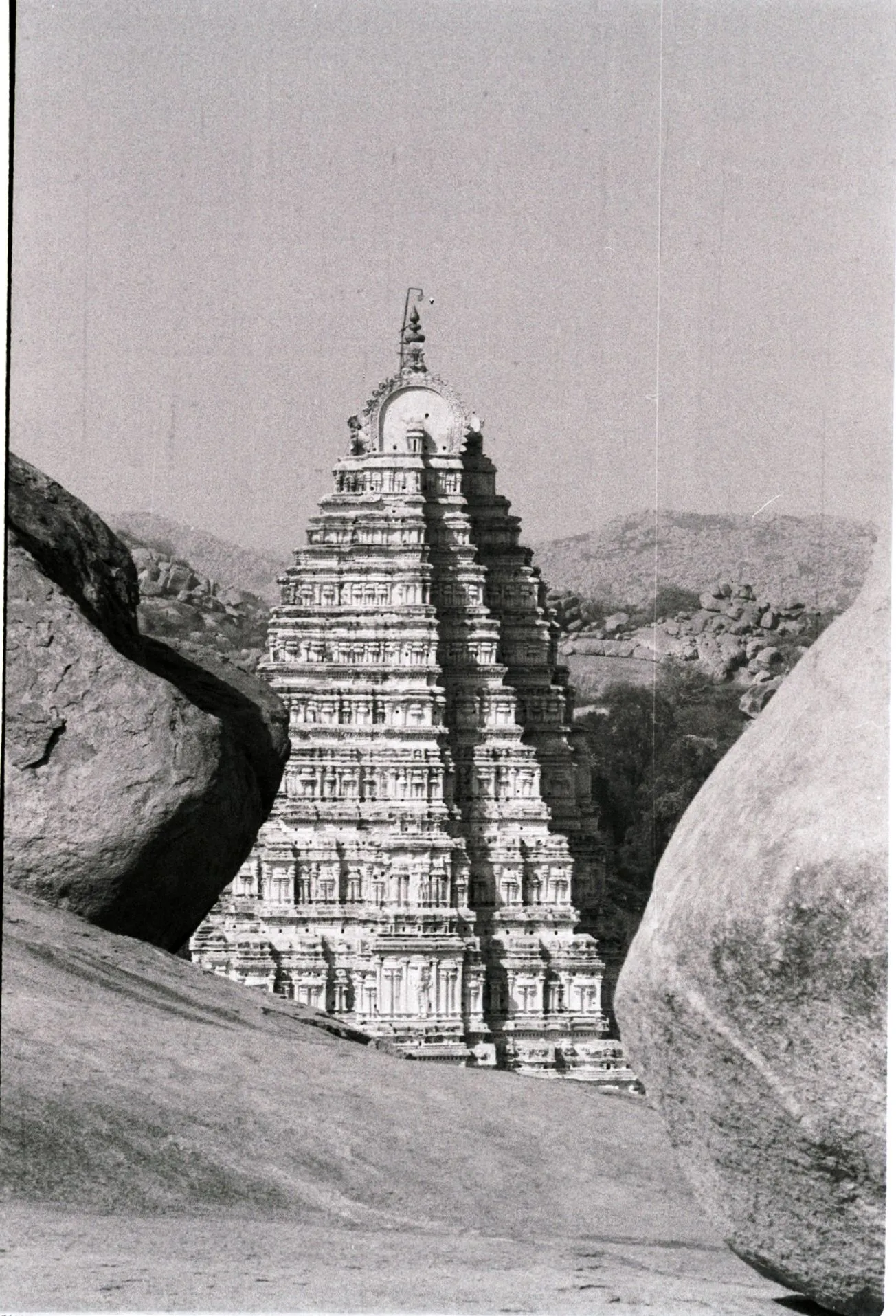
India. Guessing exposure after discovering the light meter was broken.
On a trip to India, that uncertainty became less of an idea and more of a problem. I wanted to take something different from my Zenit, so I bought a Minolta 303b. I liked the idea of travelling with another camera, something that might change how I saw the place. I realised the light meter was broken only after I had arrived and finished the first roll.
At the time, it did not even cross my mind to use a phone app for exposure. So I guessed. I judged light by instinct, badly at first, then slightly less badly. I changed aperture and shutter speed by feeling more than by knowledge. I shot around twelve rolls and had maybe seven or eight of them developed. From some rolls, I got only one or two photographs I really liked.
By digital standards, that is inefficient. By practical standards, maybe it makes no sense. But the few photographs that worked felt earned. Not because suffering makes art better, I do not believe that - but because the process left marks on the result. The uncertainty showed in those photographs. So did the mistakes. That was part of why I liked them.
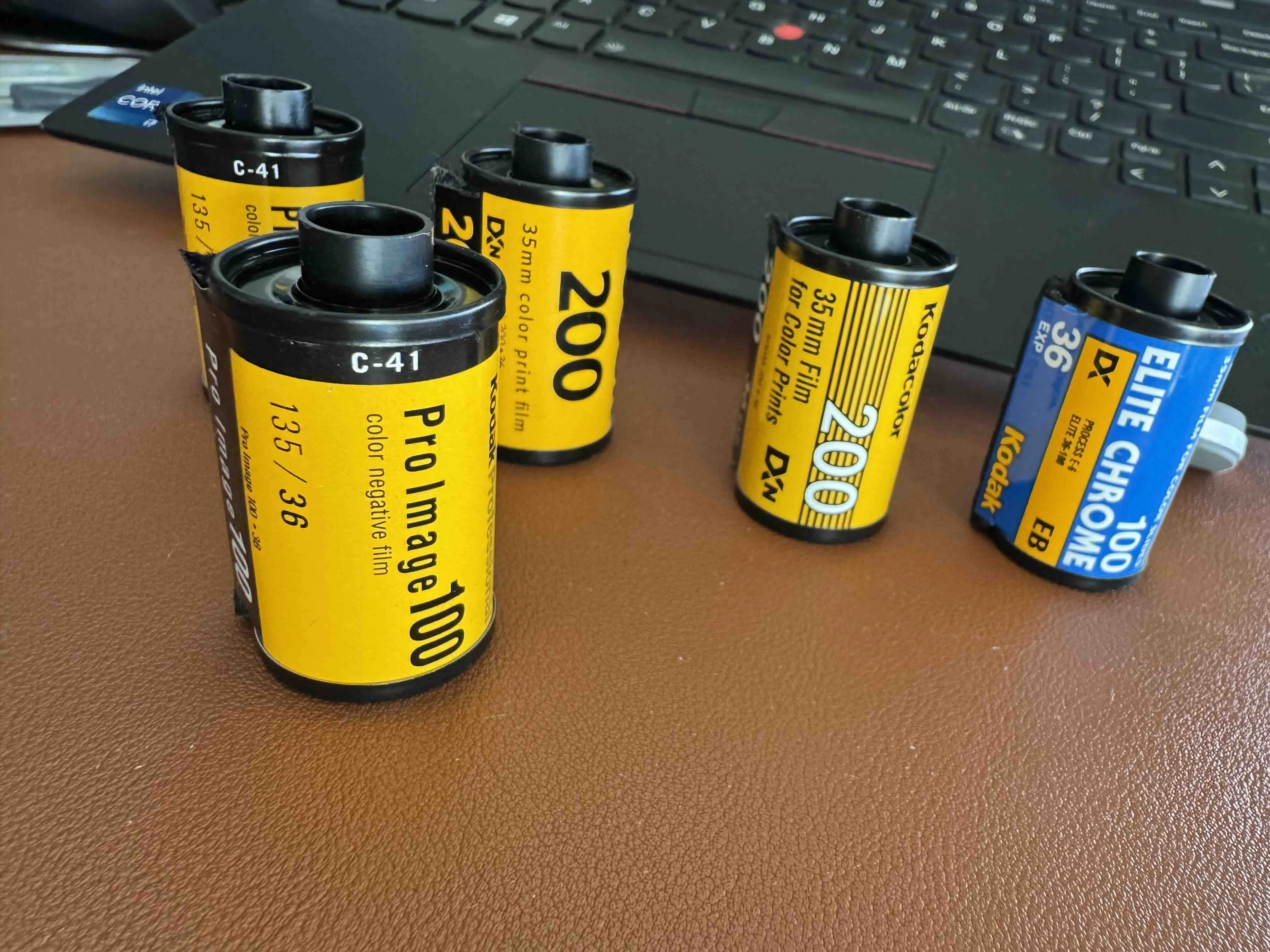
Some memories are still waiting inside rolls I have not developed.
I kept some of those India rolls undeveloped. I like doing that. I like leaving a few memories sealed for later. They are not useful in any practical sense. They are not organised, edited, backed up, or shared. They are just sitting there, holding whatever I saw then.
Maybe I will develop them and find nothing special. That is possible. But even that uncertainty has become part of why I still like them.
Years from now, when I finally develop those rolls, they may not feel like photographs from a trip. They may feel like messages from someone I used to be.
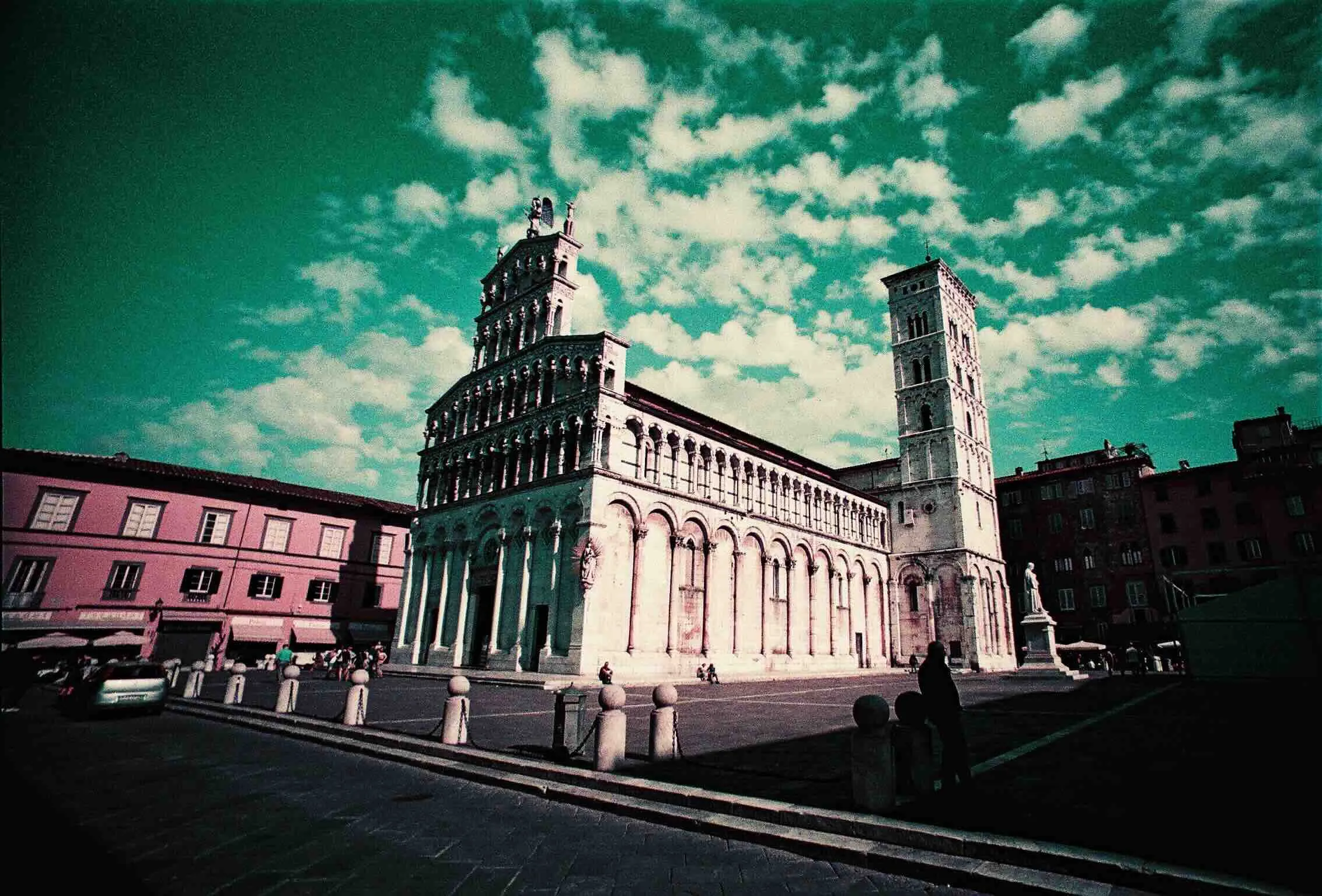
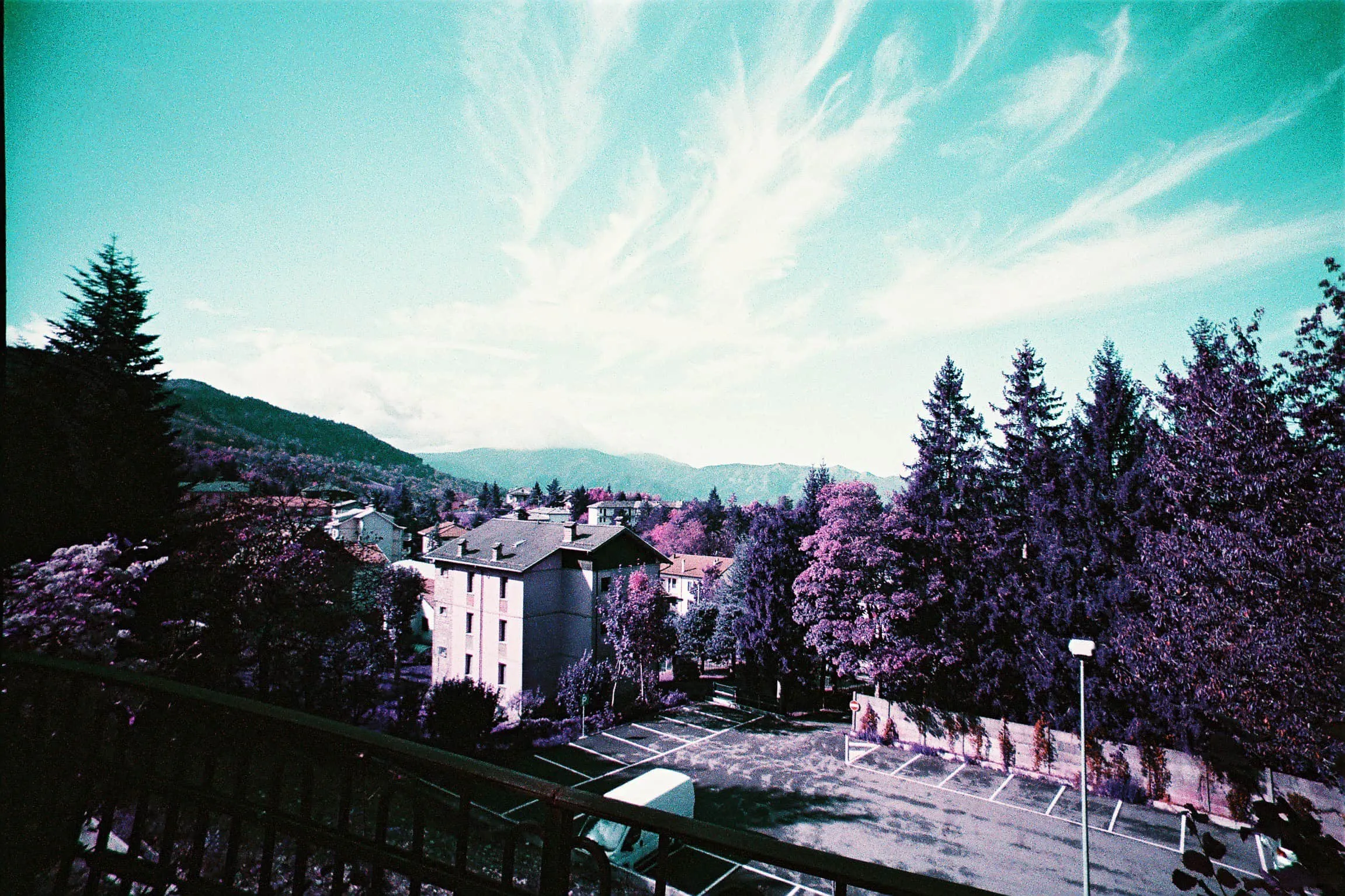
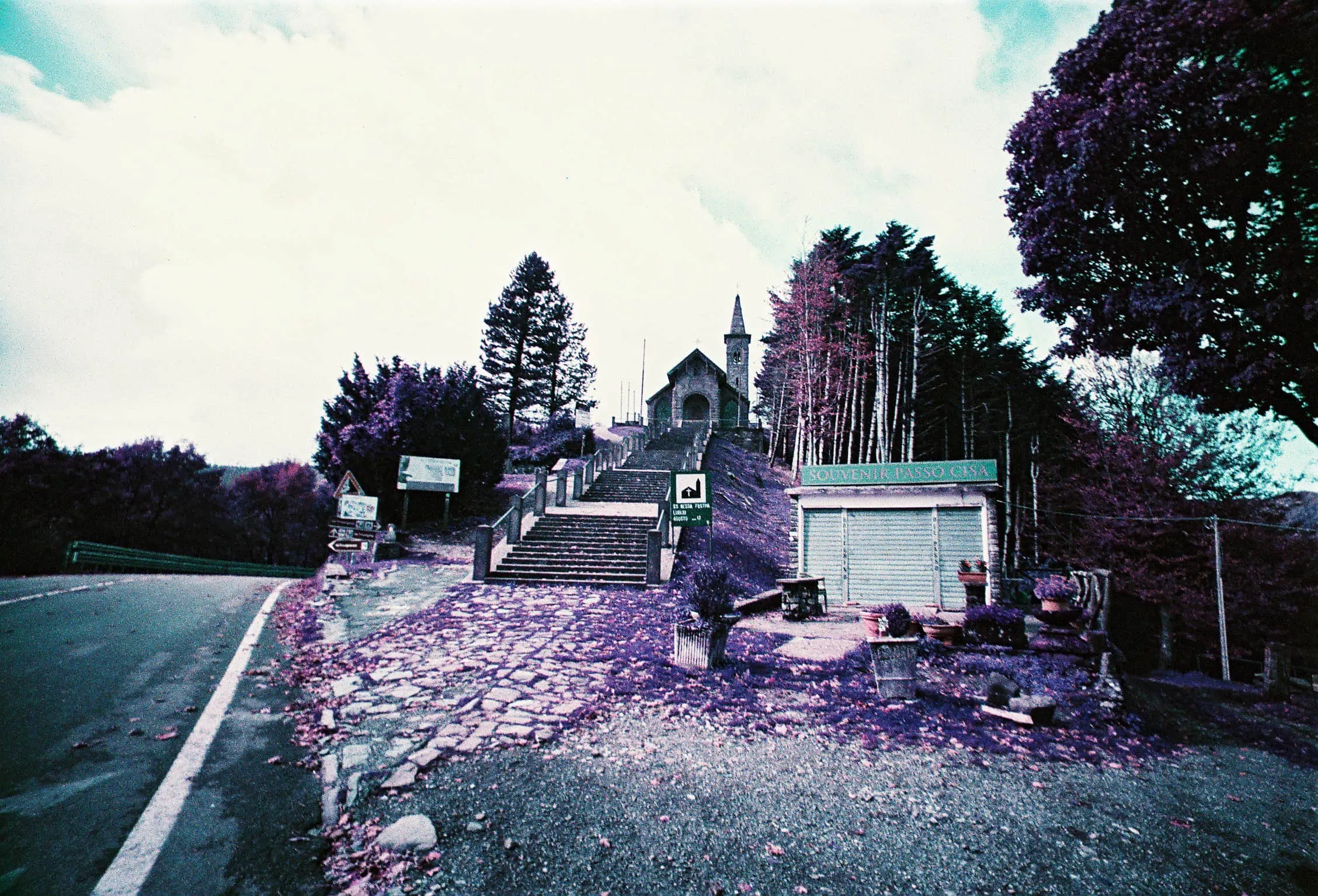
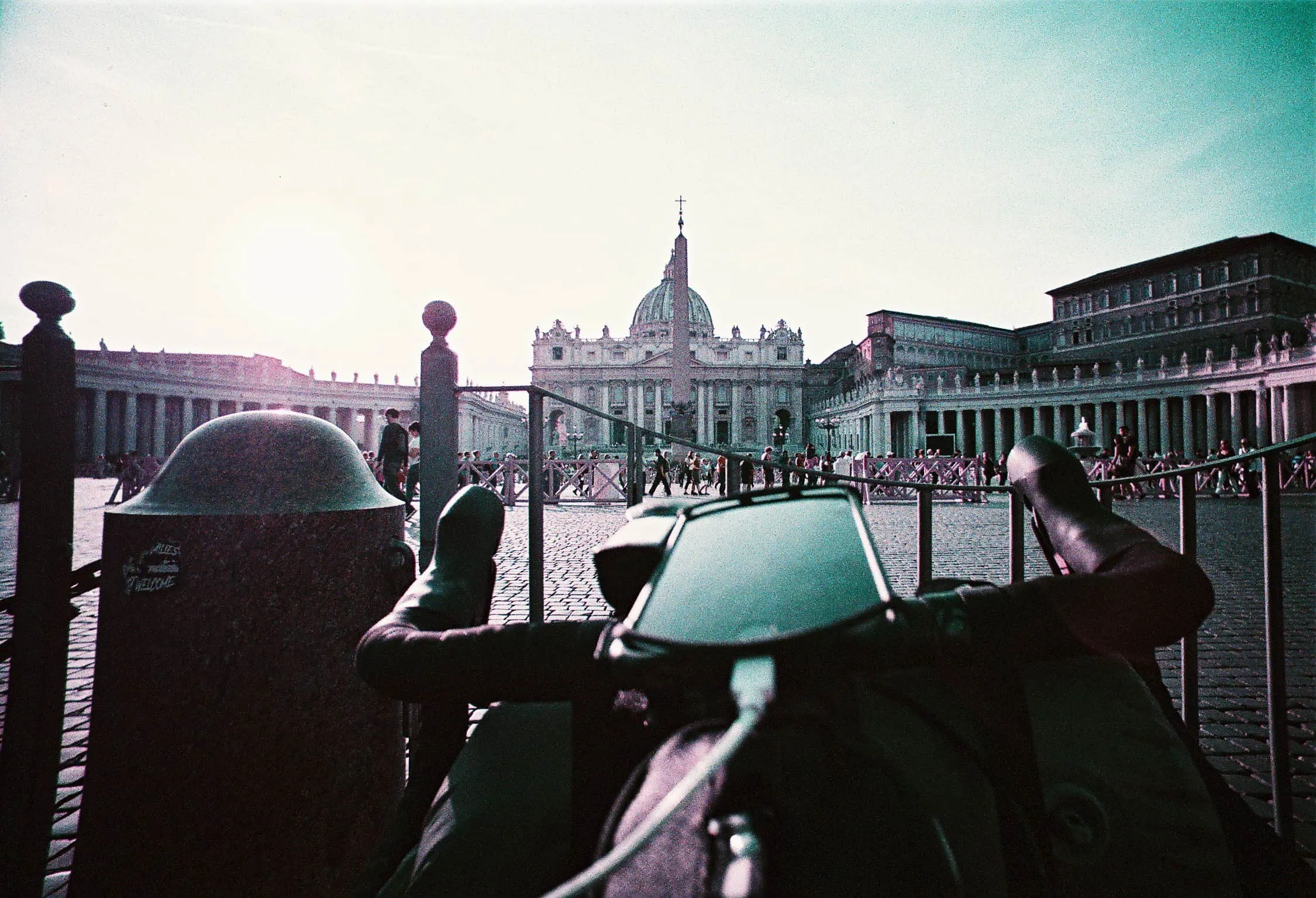
One more image from the Via Francigena roll.
I am not saying film is better than digital. Most of the time, it is not. Digital is faster, cheaper, sharper, more flexible, and more forgiving. For work, for documentation, for most practical needs, digital is the better tool. I use it. I depend on it. I am not interested in pretending otherwise.
It depends what I am asking a photograph to do. If I need accuracy, speed, or control, digital usually wins. But if I want a memory to stay uncertain for a while, film gives me something else: distance from the moment, a delay between seeing and knowing, and the chance to forget a little before the image returns.
When the scan finally arrives, I have already moved on from the moment when I pressed the shutter. The trip is over. The road is gone. The light has changed. Then suddenly there it is again: a hill, a beach, a street in India, a village on the way to Rome.
The purple photograph from Tuscany does not show me exactly what that road looked like. It shows me something else: the heat, the movement, the tiredness, the quick decision to stop, take one photograph, and keep going.
That is why I still shoot film. Not because waiting is always beautiful. Sometimes it is annoying. Sometimes it is expensive. Sometimes the result is disappointing. But every now and then, a photograph comes back and reminds me of something I would not have remembered the same way without it.